Blog

Mindfulness

Back to nature

In Solution Focused Hypnotherapy we talk about the creation of anxiety through negative thinking. Negative thoughts about the future, about what might happen. Negative thoughts about the past. About what did, or didn’t happen, and why.

This forward-thinking, backward-thinking machine can be incredibly difficult to switch off. Our subconscious minds get stuck in fight, flight or freeze mode, and our conscious minds, if they get a look-in, rationalise (incorrectly) that what we’re doing is productive thinking.

This constant back and forth can feel like being on a never-ending Pirate Ship ride, and the physical symptoms can be remarkably similar. Nausea, headache, dizziness, confusion…

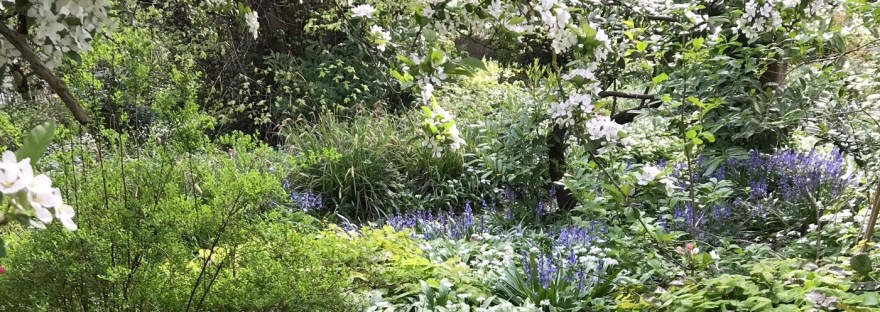
So if you’re struggling to switch off, and if you can, get out. Immerse yourself in nature. Breathe. And ask yourself,

What can I hear?

What can I see?

What can I smell?

What can I touch?

Mindfulness

Connect to your inner self

As varying versions of the COVID-19 lockdown continue across the world, fear remains around how we can safely reconnect with those we love. Many are isolating alone, and for lots of us, isolation is far from over. In such times, the solution focused approach of connecting to our inner strength can be a balm, helping us to build our resilience, so that loneliness doesn’t become overwhelming. You can take the words below as a moment for you to stop, switch off the news, focus on the present, and feel a sense of connection.

Take long deep breath, and release. You’ve got this.

Stay safe.

Connection

From the moment we are born,
We have a primitive need to be held. Soothed.
To feel the warmth of touch.
To feel connected to something bigger than ourselves.
So, in a time when connection is tainted with fear,
And touch, with frightening consequences,
We can feel lost.
Helpless to meet our deep desire to connect.

But something magical happens,
When we start to connect with our inner self.
To nurse our fear with our own inner strength.

So take a moment to close your eyes,
And feel your breath.
See light in the centre of your chest,
Beating with your heartbeat.
Let that light fill your chest cavity.
Let it drop down your torso,
Down through the water table, the rock and magma.
Connecting you right down to the centre of the earth.

Allow yourself to bathe in the warmth,
Of that grounding cord of light.
Feel its strength,
Beaming out to every living thing.
You are a part of that beautiful firework.
Connected to everything.

Mindfulness

Running for my lockdown life

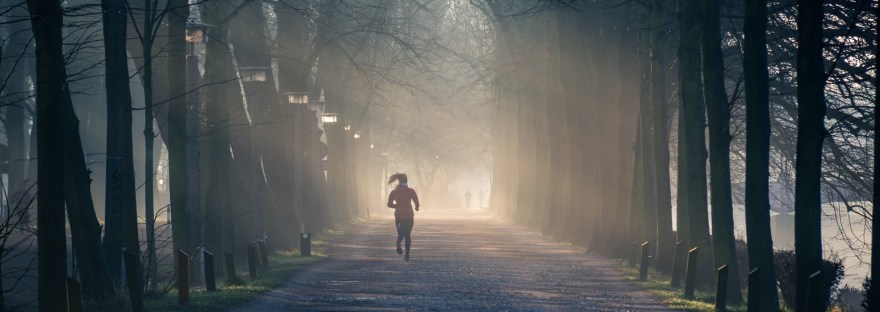
In the UK, during the COVID-19 lockdown, 1 hour of exercise per person is the daily allowance, stipulated by the government and enforced by the police, with increasingly hefty fines per offence. The focus of many a critic has been on how little time we have to escape our four walls every 24 hours, and go out into the ghostly world beyond.

And yet, spoilt as I am with a yard and two frequently empty communal gardens, I hadn’t quite realised the importance of this restriction. Until today. When I saw it as a prescription (with the help of my husband who described it as such and all but pushed me out of the house).

Just as your GP will prescribe antibiotics to help you shake that lingering chest infection or paracetamol to ease a tiresome headache, the government has prescribed us an hour of daily exercise to fight that creeping darkness that threatens to swallow us while and spit out a mumbling, distracted, irritable gremlin in our place, who puts their phone in the fridge, shouts at everyone about pretty much everything and weeps over broken biscuits and lost socks.

I thought I was going outside enough. I went out in the garden to play with the kids, put the recycling out, brought parcels inside. OK, perhaps part of me was aware that I needed to break out and go further afield for an hour, pound the pavements and be alone, but I kept finding reasons not to. A thesis to write, a child to soothe, a dinner to make, a wash to put on. The list was endless and grew longer and more confused as my mind became jumbled, squeezed and suffocated by the four walls of our home.

Until today, when my husband braved the gigantic atmosphere I had taken to carrying around the house with me for the last few days, like a rock-filled rucksack that I couldn’t remember how to take off. ‘I prescribe a walk out around the river’ he said, and realisation dawned. That was exactly what I needed. I had spent the morning incredibly frustrated by the feeling that I couldn’t find something but couldn’t figure out what that something was, and that was it. I needed to get out. I felt like crying with relief, that someone had realised.

The walk was beautiful. I looked at clouds and the boats and smiled at others who were out exercising. I even ran a bit and felt the wind and my lungs burn. And I banked a whole heap of what we call in Solution Focused Hypnotherapy the three P’s: positive actions, positive interactions and positive thoughts. These three elements work together to produce patterns in the brain that give us a steady flow of happy hormones such as serotonin, which we need to feel good in both mind and body.

So listen to the government guidance through the lens of what it is telling you to do, rather than what it is telling you not to do. It’s telling you, if you can, for one hour a day, to get out. Go. Experience. Drink in the confidence that comes with being proactive, drink in the hope that comes from positive interactions with the nods from passing strangers, drink in the positivity that fills your mind when you treat your body to sunlight, movement and connection.

Psychotherapy

Strength in Simplicity

As I learn more about Solution Focused Therapy and Solution Focused Hypnotherapy, I, and those I learn alongside, find ourselves grappling with the simplicity of it. The simplicity of the solution focused process, in which we identify where we want to go, recall our strengths and imagine a positive possible future, wherein we have achieved our best hopes, is sometimes difficult to align with the bulk of our education, which teaches us that the more complex an idea, the better; the more complex an idea, the more important; the more complex the idea, the greater the impact. Or as Alain de Botton writes in The School Of Life: An Emotional Education ‘We could expect humans to display a powerful reflex for the simple over obscure explanations […but our apparent prejudice in favour of enigma…] suggests an implicit belief that the truth should not come in a form that is easily fathomable’.

As Steve Jobs famously pointed out, ‘Simplicity is the ultimate sophistication.’ In fact, the simplicity of Solution Focused Therapy is arguably its greatest strength. When we are young, we are guided how to hold a pencil in a way that will be most comfortable for our hand and give us the most control over our writing. We practice and, like any other skill hard-earned, with practice we are eventually able to write with ease. The idea that our minds are beyond this simplistic process of learning has dominated psychology for many decades; our minds have long been deep dark pits full of old sores that we must dig up, bring into the light of day and interact with if we have a hope of a mentally healthy future. Indeed this approach has helped many achieve peace through gaining a greater understanding of their inner self.

For some, however, against this analytical backdrop, Solution Focused Therapy is like an outstretched arm from the future. It is unapologetically positive. It accepts our past with compassion, then focuses on where we want to go, and simply guides us into this new, positive, solution focused way of thinking. And it feels good.

Neuroscience has taught us that we can still learn; that, just as we learnt how to use a pencil when we were young, we can learn and relearn how to use our mind, however old we are. Breaking the problem focused mold set by the majority of psychotherapies, Solution Focused Therapy guides us to use our minds to access our strengths and apply them to the future we wish for ourselves. Yes, it feels simplistic to step forward from what a lot of other therapeutic approaches dedicate much of their time to understanding, but it also feels positive, achievable, exciting even, and that’s what makes it Solution Focused Therapy’s greatest strength.