
Blog

Solution Focused Therapy

The client is always right

This was a key message I took away from a training session I attended this week with Evan George, Co-Owner of BRIEF, the world’s leading centre for solution focused practice in therapy and counselling.

Evan George repeated this sentiment several times in different contexts, so that it felt like an undercurrent to his presentation, which is appropriate as it is a fundamental concept to grasp in order to be an effective Solution Focused Therapist.

The client is always right. Consistently standing by this belief with every question, every utterance, is extremely difficult. Even for even the most experienced practitioner. It requires discipline and dedication to the idea that the client has what they need to help themselves. 

When we consider the client as right (excepting situations where safety is compromised) we allow the client to own their story. This means the client owns their successes. We value what the client brings to the table above all else. We ask questions that guide their attention to their table of resources and give them the opportunity to explore the dimensions of each resource. This means that the client plays a crucial role in finding the way forward that works for them.

We witness the positive impact of owning our decisions every day. When our children help chop the vegetables for dinner they are more likely to eat them. When our partner reaches their own decision to clear out the garage, they are more likely to do so. Leading our journey towards progress builds a much stronger foundation for lasting change. 

So we celebrate our client’s success as just that – their successes. But what about the times when therapy doesn’t work, when the positive outcomes aren’t there? The responsibility for this, says Evan George, sits squarely on our shoulders as therapists. If we feel as though we are going nowhere, it’s because we haven’t found the right question. 

As solution focused therapists we have a vast collection of carefully worded questions to our disposal,  a cabinet crammed full of keys to unlock useful conversation. Perhaps we choose a key that doesn’t work and the client sits, arms folded; unmoving, unconvinced. Perhaps we choose a key that creaks too loudly in the lock and sends the client running for the comfort and familiarity of their problem and negative thinking. 

This can be a frustrating responsibility to take on, but it’s also hopeful. Because somewhere, nestled at the back of our cabinet of questions, there could be a key. It might have been hidden by the dust of habit. We may have erroneously decided it was too misshapen to fit any lock. Maybe we hadn’t even realised it was a key. Perhaps the client was holding it all along. But as long as we believe in our client we keep looking. Keep trusting. Holding space for positive change.

For training opportunities and some great resources on Solution Focused Brief Therapy, check out the BRIEF website https://www.brief.org.uk.

This training session was hosted by the Clinical Hypnotherapy School, whose fantastic training opportunities I can personally recommend.
Mindfulness, Solution Focused Therapy

Looking on the bright side

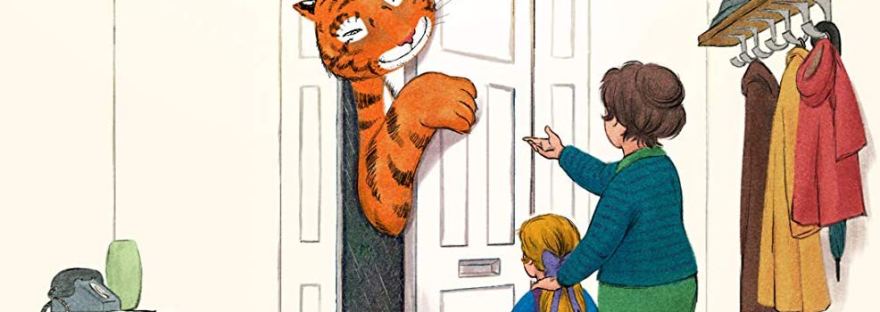
In Solution Focused Hypnotherapy, one of our main intentions is to shift the client’s focus away from the problem and towards the positive. Humans have a natural negativity bias, particularly when we are feeling stressed. This is because when we are stressed, we spend more time in our primitive minds and the primitive mind is a negative mind: it always sees the world from the worst possible perspective. The primitive mind has to be negative to ensure our survival as a human species. If we answered the door to an eight foot tiger, it’s highly unlikely that we would invite him in for tea, and chuckle as he ate all the cupcakes and drank all of Daddy’s beer, as happens in Judith Kerr’s children’s story The Tiger Who Came To Tea.

Thankfully, if we did open our front door to an eight foot tiger (or it’s less fantastical equivalent) our fight or flight response would kick in within a fraction of second, pumping out adrenalin, increasing our heartbeat, preparing our body for escape. Operating from within this stress response, we would assume the worst, we would be hyper-vigilant to any movement the tiger made, and we would be obsessional about figuring out an appropriate escape route. In this scenario, our stress response is our friend, it’s working for us, we are immensely grateful for its input.

However, in many situations, this negative focus causes us an enormous amount of needless suffering. Raging or descending into gloom about a smashed wing mirror doesn’t fix the mirror. It just suck us into our negative primitive mind, reducing the value we can both give and receive from our interactions with others. When we surface from our rage and gloom back into our intellectual minds, we are likely to reward ourselves with a hefty serving of shame about how we handled the situation. We have grown our hurt. Similarly, ranting when we find our kitchen wall has been redecorated with permanent marker, courtesy of our three-year-old, doesn’t miraculously remove the scribble. It just sucks us into our negative primitive mind, reducing the value we can give to, and receive from our child. When we escape from the cycle of ranting and regain intellectual control, we’re rewarded with the all familiar weight of parental shame about how we handled the situation. Our suffering has swelled.

In these stressful moments, wrenching our attention away from the problem and towards the positive can loom like a mammothian task. ‘Looking on the bright side’, as simple as it sounds, actually entails a lot of practice if we are to be able to apply it when we most need to. In his book Waking Up, Sam Harris suggests that just one positive thought can act as a lever to pry the mind loose from “whatever rut it has found on the landscape of unnecessary suffering.”

Acknowledging, out loud if necessary “at least the rest of the car is undamaged” or “at least we have some paint left to cover up the marker pen”, can help us to manufacture a feeling of gratitude for all the bad things that have not happened. Research has shown that gratitude is a powerful mechanism for increasing well being over time, but it can be equally powerful as a safety net when stressful events occur, bouncing us back into our intellectual minds where we can access rationale and reason, and suffer less than we otherwise would have done.

References

Harris, S. (2014). Waking up. Simon & Schuster

Kerr, J. (2006). The Tiger Who Came To Tea. (1st Ed). London: HarperCollins

Mindfulness

Pausing thought

In Solution Focused Hypnotherapy we talk about how frequently we experience some form of trance in our everyday lives. Some of this daydream-like thinking can be positive. We can lose ourselves in memories of entertaining times we have spent with our friends. We become absorbed by the imagined reality of a holiday we’re looking forward to.

But unless we practice otherwise, most of us spend most of the time in negative trance. In negative trance we are criticising ourselves for something we did or didn’t do or say; or we are criticising someone else for something they did or didn’t do or say. In negative trance we are plotting, scheming, just-in-case-ing, imagining the worst and mapping out possible ways around it.

This negative inner dialogue comes with a heaped side order of anxiety, frustration, guilt, anger, and a bunch of other unpleasant emotions that spike our body’s natural stress response. When this happens our brain pumps our bodies full of stress hormones like adrenalin and cortisol, which in turn serve to maximise both our mental and our physical discomfort. The gates to our intellectual brains slam shut and we get locked inside our emotional primitive minds where every negative thought becomes absolutely, irrationally, unbearably, horrendous.

In his book Waking Up, neuroscientist and philosopher Sam Harris refers to this rumination, both positive and negative, as “the trance of discursive thinking“, to which the antidote is meditation.

In Solution Focused Hypnotherapy we combine solution focused therapy and hypnotic trance to reassure and guide our conscious minds towards a place of peace, where, just for a little while, they let go of their grip, and the inner dialogue quietens, the never-ending thought train draws to a temporary halt.

It is in this meditative state of trance that we can enjoy, as Harris describes “a mind undisturbed by worry, merely open like the sky.”

And with our minds open, as Psychiatrist and Clinical Hypnotherapist Milton Erickson pointed out, we become much more receptive to ideas and understanding. We are more able to accept positive suggestions without our conscious minds jumping in to disagree.

When we press pause on the overwhelming blare of constant thought, especially the criticism, judgements, assumptions, and fears, we allow our minds space to breathe. To relax. To reduce our stress levels enough to unlock the door back into our intellectual minds where we can find perspective, reason, rationale and balance.

Mindfulness

Lockdown parenting: finding the positive

With schools out for lockdown, and parents working from home, the four walls of the family home loom higher; some days casting an enormous black shadow over the occupants. Sharing space without reprieve is tough. Relentless multitasking is exhausting for our minds and for our morale. 

But what if we shifted our focus to what we have, rather than what we don’t? In place of time to think, we have extra time to spend with our children, whose younger years will slip through our fingers like grains of sand. 

In place of by-the-book parenting, we have a collection of imperfect parenting moments, that, as Brene Brown points out in Daring Greatly, become gifts as our children watch us try to figure out what went wrong and how we can do better next time.

In place of freedom to connect with friends, we have freedom to connect with our home, the space we come back to every night, the partners with whom we used to bookend each day with the scraps of ourselves we had left, the children we struggled to get more than two words out of when we asked about their day.

In place of a deceptive certainty of what the future holds, we have the glorious present moment, and as Sam Harris acknowledges in his aptly named book Waking up, that’s really all we have.

In place of plans and diaries bulging with progress, we have opportunities to take stock, to change direction, to connect with another path. 

In Solution Focused Hypnotherapy, we spend time guiding our clients to reconnect with the strengths in their lives. To shift focus to the positive. Moving forward, this change in mindset can be both liberating and life changing. As Elliott Connie, Global Leader in Solution Focused Brief Therapy Elliott Connie says; “There is magic in being led by what you want, rather than what you don’t want.”

So embrace the moment; embrace the magic. And recognise that to do this is, in itself, an achievement. A demonstration of your powerful mind. 

References 

Connie, E. (2016). Small Things Can Lead to Big Things. Moments with Elliott Connie. Retrieved from https://www.youtube.com/watch?v=Rd3QIelHxhk

Harris, S. (2014). Waking up. Simon & Schuster.

Brown, B. (2012). Daring greatly: How the courage to be vulnerable transforms the way we live, love, parent, and lead. New York: Gotham Books.

Mindfulness

Does Google always have the answer?

Feeling that something is physically wrong with ourselves or someone we love can be a huge source of anxiety. 

As humans, we harbour a fundamental fear of the unknown (Carleton, 2016). It makes us uneasy, and when we can start to negatively forecast the future. We imagine what will go wrong. So when something about our body doesn’t feel right and we don’t know why, we might fill our minds with negative thoughts like ‘What if it gets worse?’ ‘What if it affects my sleep?’ ‘What if it stops me from doing what I want to do?’.  

In Solution Focused Hypnotherapy we talk about how all of these negative thoughts are converted into anxiety in our minds. As our anxiety builds we spend more time operating from our primitive emotional mind: we become irritable and distracted. We lash out or we withdraw. And this anxiety fuels yet more anxiety. 

In our desperation to know and to alleviate the anxiety that comes with the unknown, many of us reach for our phones. It has been estimated that Google’s health related searches amount to approximately 70,000 every minute (Murphy, 2019).

However, new research from Edith Cowan University (ECU)  published in the Medical Journal of Australia this week revealed that online symptom checkers produce the correct diagnosis just 36 per cent of the time. 

So not only is this information inaccurate, it provides further fuel for our negative forecasting. It gives colour and detail to a number of possible negative futures, so that we can imagine them in more clarity, again and again, increasing our anxiety each time. 

So next time you feel the urge to reach out to Google for a medical diagnosis,  take a moment.  Make an appointment with a health professional, and then focus your attention on the present, on what you can do, right now, to trigger your parasympathetic nervous system and get your neurochemistry working in your favour. 

References

Carleton, R. N. (2016). Into the Unknown: a review and synthesis of contemporary models involving uncertainty Journal of Anxiety Disorders, 39. 30-43, 10.1016/j.janxdis.2016.02.007

Murphy, M. (2019) Dr Google will see you now: Search giant wants to cash in on your medical queries. The Telegraph. Retrieved from https://www.telegraph.co.uk/technology/2019/03/10/google-sifting-one-billion-health-questions-day/

Hill, M. G., Simm, M., & Mills, B. (2020) “The quality of diagnosis and triage advice provided by free online symptom checkers and apps in Australia”. Medical Journal of Australia doi:10.5694/mja2.50600

Mindfulness

Is mindfulness selfish?

One of the criticisms often levelled at meditative practices, like self-hypnosis, is that they are selfish. Too introspective, too inward-looking. Drawing our attention away from all the bad things happening in the world that we should be out there trying to fix. Encouraging us to settle, to embrace inadequacies. To sit cross legged in a bubble of peace while everything around us collapses. 

In 2017, Psychiatrist Dr Alison Gray of the Royal College of Psychiatrists suggested that solitary meditative practices can cause us to become more self-centred (Petter, 2017). Instead, Dr Gray encouraged us to seek out a community with whom we can practice mindfulness.

However, as COVID-19 isolates much of the world in their own homes, away from their support networks and away from their communities, these solitary meditative practices can be a useful tool in lowering our anxiety, building our resilience, and connecting with our inner resources. Gifting ourselves some time each day to nurture our minds, release anxiety and embrace the present moment can be a powerful antidote to the feelings of frustration and helplessness brought about by the lockdown. We are locked down, but our minds don’t have to be.

Embracing mindfulness to protect our mental health can be far from selfish. As neuroscientist, philosopher and best-selling author Sam Harris writes in his book Waking Up, meditating alone doesn’t necessarily equate with self-centredness; in fact, it can amount to precisely the opposite: “One can […] spend long periods of time in contemplative solitude for the purpose of becoming a better person in the world – having better relationships, being more honest and compassionate and, therefore, more helpful to one’s fellow human beings.”

We don’t need to feel guilty for prioritising our inner peace sometimes, even while those around us are struggling, as we have more to offer them when we ourselves are calm and centred. As Sam Harris argues “The world is in desperate need of improvement – in global terms, freedom and prosperity remain the exception – and yet, this doesn’t mean we need to be miserable while we work for the common good.”

References

Petter, O. (2017, December 29). Mindfulness could be making you selfish, psychiatrist warns. The Daily Telegraph. Retrieved from https://www.independent.co.uk/life-style/mindfulness-selfish-mediation-psychiatrist-dr-alison-gray-a8133106.html

Harris, S. (2014). Waking up. Simon & Schuster.

Psychotherapy

Accepting our inner selves: using the Internal Family Systems (IFS) model in Solution Focused Hypnotherapy

This week I attended a training seminar led by founder of the Whole Health Medicine Institute, Lissa Rankin, MD, and founder of the Internal Family Systems model Richard Schwartz, PHD.

Firstly, a huge thank you to Lissa and Richard for running the seminar, which, as someone relatively new to IFS, I found really accessible and informative, and very useful for therapists like myself working with those impacted in some way by COVID-19. 

The seminar got me thinking about the value of the IFS model for use in Solution Focused Hypnotherapy. 

The analytical side of IFS can often draw clients towards childhood experiences as they follow the trailhead back from their present thoughts and behaviour, and this contrasts with the SFH focus on the future, not the past. However, there do seem to be many areas in which Solution Focus Hypnotherapy, and Internal Family Systems align. 

  1. Both IFS and SFH share the same positive assumption that we all essentially have the capacity to draw on our inner resources in identifying where we want to get to and getting there. As Richard Schwarz explains, in IFS, “Everyone has an essence or state amid the terror, the Self in each of us is always there—the “I” in the storm, the calm depth beneath the roiling waves.” (Rankin, 2020). The positive suggestions in SFH encourage both self acceptance and a focus on our strengths and successes. Similarly, IFS aims to bring the exiles – the parts of ourselves that we don’t like – into acceptance, in doing so accessing the inherent strengths. 

  1. Both SFH and IFS work with the subconscious mind, using rewinding and reframing techniques to help us achieve positive change, although the use of rewind in SFH is usually restricted to specific phobias.  Equally, both SFH and IFS use solution focused questioning to assist this process.

  1. The multiplicity of our minds is a key focus in both SFH and IFS. In SFH we draw on neuroscientific understanding about the brain to recognise the role of its multiple parts in how we feel and behave, while in IFS the multiplicity is through the metaphysical understanding of how our personalities are comprised of multiple sub personalities, or parts.

  1. Both SFH and IFS aim to work with, rather than against, all parts of our mind. In SFH we talk about the primitive mind as an essential part of us. Our intention is to utilise the creative strength of the subconscious mind through meditative practice, while consciously thinking, acting, and interacting in a positive way to avoid operating from our primitive mind in times of stress. The anger, anxiety and depression we resort to when we operate out of our primitive mind are often unwelcome in today’s society, but 100,000 years ago would likely have saved our life. Even now, the speed at which our subconscious mind can react to danger saves lives every day. In the same way, according to the IFS model all of our personality ‘parts’ are essentially good, although how they are expressed sometimes when we are under pressure can cause us trouble. Progress comes in accepting all of our parts, and nurturing rather than rejecting the parts of us we don’t like or fear.

The value of the IFS model for SFH is in the precision it can bring to identifying our inner resources through solution focused questioning (Adams, 2018). The SFH approach provides a meditative platform through which to employ the IFS technique of focusing on one thought, belief or sensation at a time and using it to get back to the part of us it comes from (Schwartz, 2020). In turn the IFS model gives SFH a useful understanding of our personalities that lends itself to exploration through hypnosis. The visual metaphor of our multiple inner selves is something we can use in SFH to encourage a positive inner dialogue, within which we can draw on our stronger parts to nurture the parts of ourselves we wish to grow.

References

Rankin, L. (2020). The viral wake-up call. An IFS perspective. Retrieved from https://lissarankin.com/the-viral-wake-up-call-an-ifs-perspective-by-dick-schwartz/

Adams, J. The Situated Self as a Motivational Resource. Journal of Systemic Therapies 37 (3), 29-41, 2018. Retrieved from https://guilfordjournals.com/doi/pdf/10.1521/jsyt.2018.37.3.29

Psychotherapy

A punch is just a punch; a question is just a question

Martial Artist Bruce Lee once said;

“Before I learned the art, a punch was just a punch, and a kick, just a kick. After I learned the art, a punch was no longer a punch, a kick, no longer a kick. Now that I understand the art, a punch is just a punch and a kick is just a kick.”

In a recent presentation on Solution Focused Brief Therapy (SFBT), Co-Owner at BRIEF International Evan George deconstructed, in much the same way, the most important question in SFBT:

What are your best hopes from our talking today? 

As solution focused therapists in training, we start using this question because we are told to do so. And then we carry on using it because we experience first-hand that it works with our clients. 

But in order to utilise the best of solution focused therapy, we have to understand whyWhy is this question so important?

As self-help guru Deepak Chopra teaches, language creates reality, and in solution focused therapies, we use language to help shift our clients’ focus away from their problem and towards their preferred future. 

In his presentation, George walks us through this foundational question until we understand all of the considered mechanisms behind these eight simple words. 

What are your best hopes from our talking today?

In this one question we can communicate to our clients that we believe in them, we believe that they have hopes. We are interested in, and listening for, their hopes.  We welcome their best hopes; the hopes they turn over in their minds in the early hours of the morning; the hopes they hide from the world behind layers of bravado and self-defeatism. They might push us away by responding to this question with unattainable wishes, or mundanities they can accomplish all too easily. But we keep them on track with that one, crucial word – hopes. 

Once we understand the art of SFBT; once we understand exactly why we ask what we ask; then we can have unshakeable confidence in our approach. So we can begin with ‘What are your best hopes from our talking today?” And if we have confidence in our approach, so will our clients.

References

George, E. (2020, May 10). The Best Hopes Question: a detailed deconstruction . Retrieved from https://www.youtube.com/watch?v=sMCk2d2LsCA

Psychotherapy

Small things can lead to bigger things

In one of his Moments with Elliott Connie, psychotherapist, author, lecturer and founder of The Solution Focused University, Elliott Connie, recounts the inspiring story of US Navy SEAL Marcus Luttrell, who was caught under enemy fire while accomplishing a mission in 2005. During one battle, in which many of his comrades were killed, Luttrell was shot over a dozen times and fell off multiple cliffs, breaking his legs, his back and multiple other bones in his body, biting his tongue in two, and knocking himself unconscious. When Luttrell woke up, his body riddled with shrapnel, he was aware that the gunfire had ceased, but realised that he could no longer walk or move. Luttrell thought he was dying, and yet, in that moment, chose to do something amazing that ultimately saved his life. He reached out as far as he could and drew a line in the mud. And then he set himself the task of hauling his broken body over that line. Luttrell thought that if he could do that, and if he was still alive, he would do it again. And again. Luttrell did this for seven miles, until he found water and was rescued.

Luttrell’s incredible story has been the basis for both the book and movie Lone Survivor, and he has given multiple lectures on his experience and the lessons he has learned from it.

As Elliott points out, this story gives us an inspirational example of how challenges can be more achievable once we break them down in little tasks. This approach is something we can draw on in our everyday life, when we feel overwhelmed by an assignment we have to write, a tax return we have to file, a room we have to tidy, a commute we have to complete. Such challenges can loom large like mountains, but every mountain is made of rocks, and if we shift our focus to putting one foot in front of the other, we can conquer the mountain, rock by rock.

For many, COVID-19 has been that explosive attack, shattering our life as it was. Many have lost loved ones, jobs, relationships, security, meaning. And with the majority of the world still closed for business, there is little motivation to start picking ourselves up.

But if we break down the seemingly impossible challenge of getting back up into tiny tasks, we can motivate ourselves, with each small success, to carry on with the next task. And the next. And the next. Each success, however small, triggers our brain’s reward system to facilitate this process. Every positive action activates the production of hormones like serotonin and dopamine, which boost our self-esteem and our motivation to act positively again. And again. Helping us to move forward step by step, to find a new normal amid the rubble.

References

Connie, E. (2016). Small Things Can Lead to Big Things. Moments with Elliott Connie. Retrieved from https://www.youtube.com/watch?v=Rd3QIelHxhk

Luttrell, M & Robinson, P. (2014). Lone Survivor: The Incredible True Story of Navy SEALs Under Siege. Sphere.

The Hero Summit. (2013, October 13). Lone Survivor: A Conversation. Retrieved from https://www.youtube.com/watch?v=B5m9CMT_1bU

Mindfulness

Daydreaming

In Solution Focused Hypnotherapy, we strive to break through inaccurate and media-fuelled misunderstandings of what trance is. We emphasise its normalcy, its ordinariness, as something fundamentally, and very basically, human. We talk about how we experience trance every day, several times a day, when we daydream while doing something relatively monotonous that doesn’t occupy much brain space, like washing up, or driving somewhere very familiar.

And yet, daydreaming itself is something that has been scorned, ridiculed, and undervalued, almost as much as trance. The unreachable windows of Victorian school buildings are monuments to education’s efforts to drill out our natural inclination to daydream. Society teaches us from a young age that daydreaming is inconvenient, a waste of time, something we are reprimanded for doing.

So we train ourselves to measure our day by its productivity and shake off our reveries as quickly as we can. We get increasingly good at doing this, so that by the time we are adults we inevitably feel lost, out of touch with our inner self, at a loss as to who we are, because we have spent so little time stopping to listen, to process, to understand.

In The School of Life: An Emotional Education (2019), Alain de Botton eloquently captures with his words, both the unfortunate reputation, and the significant value, of daydreaming:

“THE IMPORTANCE OF STARING OUT OF THE WINDOW

We tend to reproach ourselves for staring out of the window. Most of the time we are supposed to be working, or studying , or ticking things off a to-do-list. It can seem almost the definition of wasted time, It appears to produce nothing, to serve no purpose. We equate it with boredom, distraction, futility. The act of cupping our chin in our hands near a pane of glass and letting our eyes drift in the middle distance does not enjoy high prestige. We don’t go around saying, ‘I had a great day today. The high point was staring out of the window.’ But maybe, in a better society, this is exactly what people would quietly say to one another.
The point of staring out of a window is, paradoxically, not to find out what is going on outside. It is, rather, an exercise in discovering the contents of our own minds. It is easy to imagine we know what we think, what we feel and what’s going on in our heads. But we rarely do entirely. There’s a huge amount of what makes us who we are that circulates unexplored and unused. It’s potential lies untapped. It is shy and doesn’t emerge under the pressure of direct questioning. If we do it right, staring out of the window offers a way for us to be alert to the quieter suggestions and perspectives of our deeper selves.”